+
+ +
+










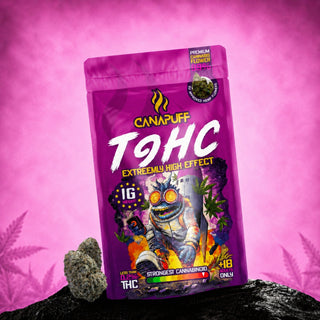

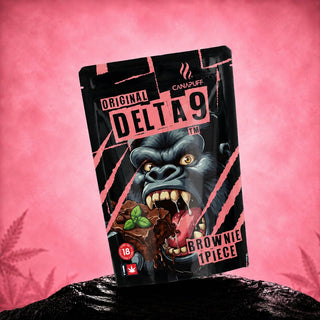
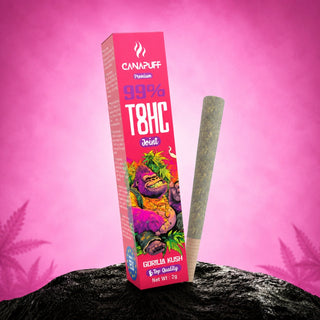


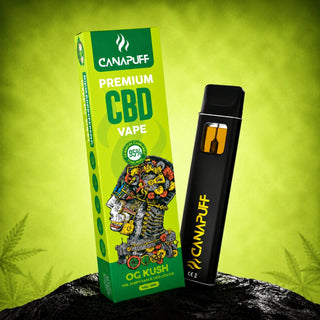
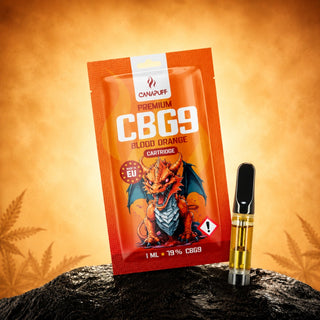


T9HC is a trade name for a semi-synthetic cannabinoid that is made in a lab from hemp-derived CBD and sold in parts of Europe as vapes and coated flowers. Vendors describe it as a compound with a delta-9 type structure, which is the structure of the main psychoactive compound in cannabis, and users report strong, long-lasting effects. There is no official scientific definition behind the name, almost no published research exists, and its legal status in Europe is unclear and changing. If you want to know what a specific product contains, the lab report is the only reliable answer.
What T9HC is: a trade name, not a scientific term
The name T9HC appears on product labels, not in chemistry textbooks or drug laws. Sellers use it for a compound they describe as closely related to classic delta-9 THC. The "9" is usually explained as the position of a double bond in the ring structure of the molecule, the same position as in delta-9 THC. A similar logic is used for its sister product, which we explain in our guide What is T8HC?
Because T9HC is a market name, there is no rule that defines what a product with this label must contain. Two products called T9HC from two different producers can have a different composition. This is the most important point to understand before anything else.
Why the lab report matters
A certificate of analysis (COA) from an independent laboratory shows what was actually measured in a batch. When you look at a lab report for a T9HC product, check these points:
- Cannabinoid profile: which individual cannabinoids were found and in what amounts, not only a single "T9HC" percentage.
- Batch number and date: the report should match the batch of the product you are looking at.
- Residual solvents and heavy metals: these show whether leftovers from the production process were tested.
- The laboratory: the name of the lab should be clearly visible, so the report can be checked.
How T9HC is made from hemp-derived CBD
T9HC does not occur in meaningful amounts in hemp or cannabis plants. According to vendors, it is produced in a lab from CBD that is extracted from low-THC hemp. The CBD is converted with the help of acids, solvents and controlled heat. This type of chemical rearrangement is called isomerization. The result is then purified into a concentrated distillate, which is filled into vapes or sprayed onto hemp flowers.
The European Union Drugs Agency (EUDA) describes the same basic chemistry for HHC and related substances: CBD is converted under acidic conditions, and depending on the reaction conditions, several THC isomers and other by-products can form. The US Centers for Disease Control and Prevention (CDC) also warns that converting CBD with solvents, acid and heat can create by-products that are not well characterized. This is another reason why a full lab report is more useful than any marketing description.
So T9HC is semi-synthetic: the starting material comes from a plant, but the final compound is made in a laboratory.
How users describe the effects of T9HC
There are no clinical studies on T9HC in humans. Everything in this section comes from user reports and vendor descriptions. These reports are not measured results, and the experience can be very different from person to person.
- Intensity: users often describe T9HC as one of the strongest hemp-derived cannabinoids on the market, with a clear mental effect that many compare to classic cannabis.
- Body feeling: many reports mention a heavy, relaxing body feeling, especially at higher amounts.
- Duration: T9HC is often reported to last 6 to 10 hours, which is clearly longer than what users report for T8HC or HHC.
- Onset: with vapes, users usually notice the first effects within minutes. With flowers, the onset is described as somewhat slower and more gradual.
Some users also report unwanted effects such as a racing heart, anxiety, dizziness or a dry mouth, in particular after taking too much. The EUDA states that the effects of semi-synthetic cannabinoids in humans are poorly studied, and that reported adverse reactions range from mild to severe poisoning. Because of the reported strength and long duration, T9HC is not a cannabinoid for beginners.
T9HC vs T8HC vs HHC vs delta-9 THC
People often ask how T9HC compares with related cannabinoids. The table below gives a rough orientation. For T9HC and T8HC, the information is based on user reports, not on studies. Our detailed T8HC vs T9HC comparison goes deeper into the differences between the two.
| Aspect | T9HC | T8HC | HHC | Delta-9 THC |
|---|---|---|---|---|
| What the name stands for | Trade name, delta-9 type structure (as described) | Trade name, delta-8 type structure (as described) | Hexahydrocannabinol, no double bond in that ring | Main psychoactive compound in cannabis |
| Origin | Semi-synthetic, from hemp CBD | Semi-synthetic, from hemp CBD | Semi-synthetic, from hemp CBD | Occurs naturally in cannabis |
| Reported strength | Very strong | Strong, often called more balanced | Moderate to strong | Strong |
| Reported duration | Often 6 to 10 hours | Often 3 to 5 hours | Shorter than T8HC | Several hours, depending on the form |
| Published human research | None found | None found | Very limited | Extensive |
For delta-8 THC, the best studied relative of T8HC, the CDC estimates that it is about 50 to 75% as psychoactive as delta-9 THC and that it may carry similar risks of impairment. No comparable figures exist for T9HC. If you want an overview of all these cannabinoid families, our beginner's guide to cannabinoids explains how they relate to each other.
Legal situation of T9HC in Europe
The legal status of T9HC is not clear, it differs from country to country, and it can change quickly. We cannot tell you that T9HC is legal where you live. Here is what official sources show about the wider situation:
- Semi-synthetic cannabinoids are being restricted. The EUDA reports that HHC, the first semi-synthetic cannabinoid identified in Europe, is controlled in at least 22 EU Member States, and that 24 semi-synthetic cannabinoids had been identified on European markets by the end of 2024.
- Delta-8 THC is internationally controlled. According to the EUDA, delta-8 THC is scheduled under the 1971 UN Convention on Psychotropic Substances. Delta-9 THC is also controlled in most European countries.
- Some laws cover whole groups of substances. The German law on new psychoactive substances (NpSG), for example, defines a broad group of compounds with the same core structure as THC, regardless of the position of double bonds, and includes all stereoisomers.
- The hemp THC limit is about growing hemp. It does not make a cannabinoid that is made from hemp CBD in a lab automatically legal to sell or possess.
Before you buy or use T9HC, check the current rules in your own country with your national authorities. Laws in this area are updated often, and new compounds can be added to control lists at short notice.
Responsible use of T9HC
If T9HC is legal where you live and you decide to try it, these basic harm reduction rules apply:
- Start low: take one small puff from a vape or a very small amount of flower.
- Wait: give it at least 30 minutes before you take more. The effects can build slowly, and the most common mistake is taking a second dose too early.
- No driving: do not drive or operate machinery while the effects last, which can be many hours with T9HC.
- No mixing: do not combine T9HC with alcohol, medication or other substances.
- Not for everyone: T9HC is not suitable for people under 18, for pregnant or breastfeeding people, or for people with heart problems or a history of mental health conditions.
Use it in a safe place, ideally with someone you trust nearby. If you notice that you need more and more to feel an effect, our article Why can't I get high anymore? explains how tolerance works. If you want to see which formats exist, the T9HC collection shows the available vapes and flowers together with their lab reports.
FAQ about T9HC
Is T9HC the same as THC?
No. T9HC is a trade name for a semi-synthetic compound that vendors describe as having a delta-9 type structure. Delta-9 THC is a defined substance that occurs naturally in cannabis. Only a lab report can show which cannabinoids a specific T9HC product contains.
How long do the effects of T9HC last?
Users often report 6 to 10 hours, which is longer than most other hemp-derived cannabinoids. There are no studies that measured the duration, and it depends on the amount, the format and your tolerance.
Will T9HC show up on a drug test?
This is very likely. Standard drug tests look for THC metabolites, and compounds with a THC-like structure can lead to a positive result. If you are subject to drug testing, avoid T9HC and other psychoactive cannabinoids.
Is T9HC stronger than HHC?
Users generally describe T9HC as clearly stronger and longer lasting than HHC. This is based on user reports only, because no study has compared the two compounds directly.
Sources
- New psychoactive substances: the current situation in Europe (European Drug Report 2025), European Union Drugs Agency (EUDA)
- Hexahydrocannabinol (HHC) and related substances, European Union Drugs Agency (EUDA)
- Increases in Availability of Cannabis Products Containing Delta-8 THC and Reported Cases of Adverse Events, US Centers for Disease Control and Prevention (CDC)
- Anlage 1 NpSG (Neue-psychoaktive-Stoffe-Gesetz), German Federal Ministry of Justice, gesetze-im-internet.de