+
+ +
+








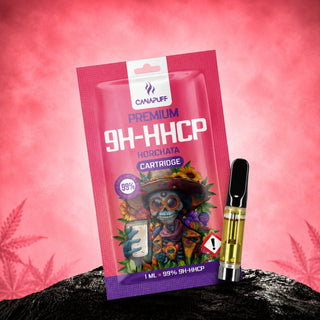


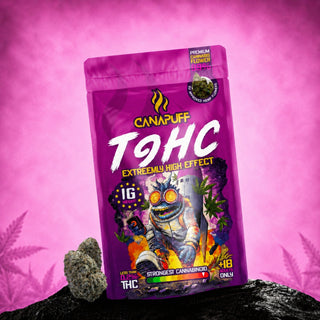

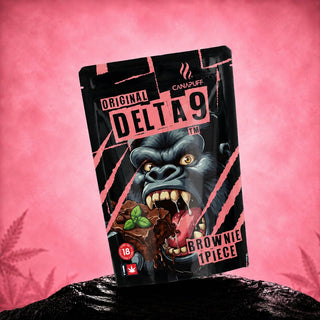
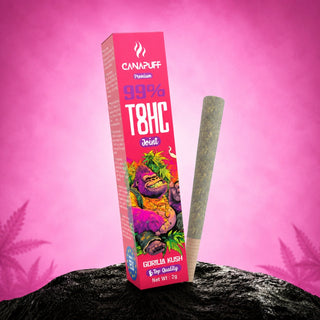


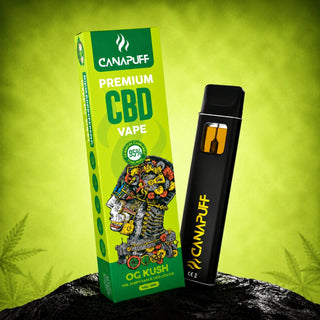


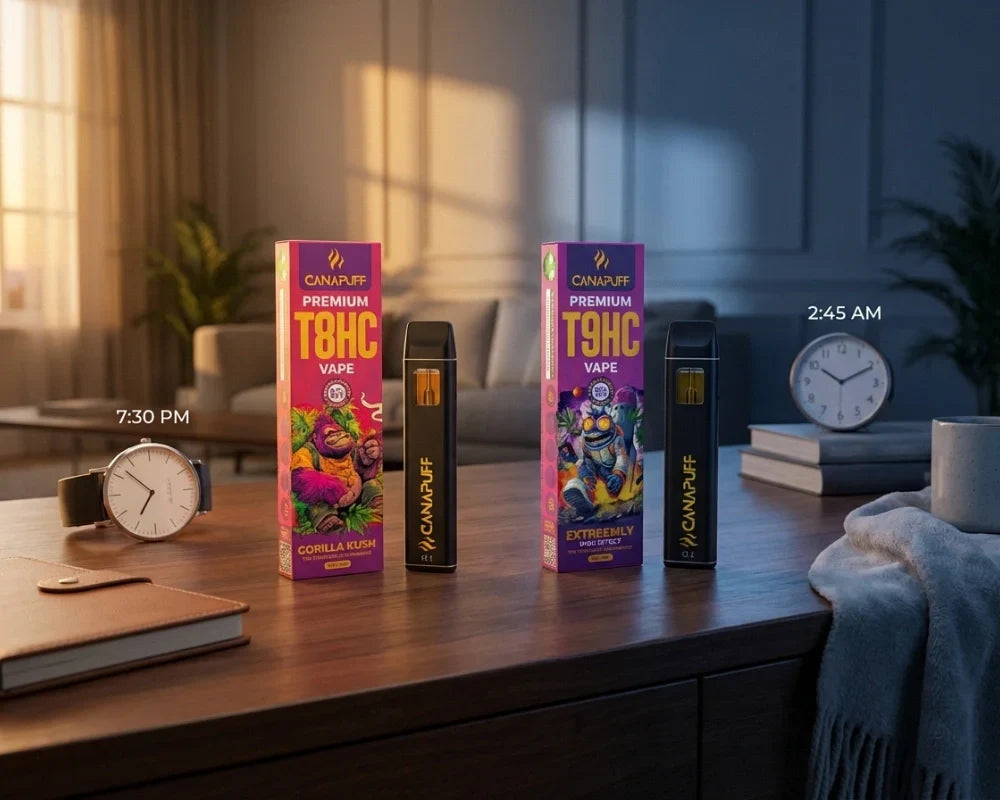
T8HC and T9HC are trade names for two semi-synthetic cannabinoids sold in parts of Europe. They are usually described as related to delta-8 and delta-9 type THC structures and are marketed as stronger than HHC. Very little independent research exists on either one, so most of what you read about their effects comes from sellers and user reports. This guide compares what is known, what is not, and what to check before you even think about using them, including the legal situation, which differs from country to country and keeps changing.
T8HC vs T9HC: two related compounds, two different reputations
T8HC and T9HC show up side by side in many online discussions, and the comparison usually boils down to one question: which one is stronger and how long does it last? The honest answer is that nobody can give you precise numbers. Neither substance has been studied in published clinical research, and there is no agreed chemical definition behind the names.
What you can say is that both belong to the wider group of so-called semi-synthetic cannabinoids. These are compounds made in a lab by chemically converting cannabinoids such as CBD, which is extracted from low-THC hemp. The EU Drugs Agency (EUDA) describes this market as fast-moving, with relatively limited information available on HHC and related substances. That caution applies even more to newer names like T8HC and T9HC.
If you are new to the topic, our beginner's guide to cannabinoids from THC to THCP and HHCP explains the basic families and how they relate to each other.
What is T8HC?
T8HC is a product name used for a hemp-derived, semi-synthetic cannabinoid. The "8" in the name points to a delta-8 type structure, where the key double bond sits in a different position than in classic delta-9 THC. Sellers describe it as euphoric at low amounts and more physically relaxing at higher amounts, but these are user impressions, not measured results.
For context, the best studied "delta-8" compound is delta-8 THC itself. A 2024 review in the journal Molecules describes delta-8 THC as a positional isomer of delta-9 THC with lower activity at the CB1 and CB2 receptors, and notes that most commercial delta-8 THC is made from CBD in a lab. Whether T8HC behaves the same way is not established. You can read more in our separate article What is T8HC? and in our overview of delta-8 THC effects, legality and products.
What is T9HC?
T9HC is the matching name for a compound described as closer to a delta-9 type structure, which is the structure of the main psychoactive compound in cannabis. Because of that, users often describe it as feeling more like classic cannabis than T8HC, with a stronger mental effect and a longer duration. Again, these descriptions come from user reports and marketing texts. No published study has measured its potency, onset or duration in people.
Our article on the T9HC cannabinoid and what is known about this emerging compound goes into more detail on its background.
Effects: how do they actually compare?
Since there is no clinical data, the comparison below reflects how the two are commonly described, not proven facts. Treat it as a rough orientation only.
| Aspect | T8HC (as commonly described) | T9HC (as commonly described) |
|---|---|---|
| Structure the name refers to | Delta-8 type | Delta-9 type |
| Reported intensity | Strong, but often called more balanced | Often called stronger, especially mentally |
| Reported duration | Shorter | Longer |
| Published human studies | None found | None found |
Onset: With inhaled products, users usually report that effects start within minutes and build over the following half hour. With edibles, onset is much slower and harder to predict.
Mental effect: T8HC is often described as clearer, T9HC as heavier and closer to a classic cannabis high.
Body effect: Both are said to be relaxing. T9HC is usually described as heavier.
Duration: Users generally report that T9HC lasts noticeably longer than T8HC. Exact hours vary widely from person to person and depend on the amount, the product and your tolerance.
Intensity: Individual responses vary a lot. Some people find even small amounts of either compound too much.
Which one should you choose?
The more useful question is whether you should use either of them at all. Before you decide anything, check three things.
- The law where you live. Many European countries have already placed HHC and similar substances under control, and new compounds are often added as soon as they appear. The EUDA's European Drug Report 2025 notes that HHC is now controlled in at least 22 EU Member States. Rules for T8HC and T9HC can differ by country and change quickly, so always check your current local rules first. Our overview of THC rules in Europe country by country is a starting point, not legal advice.
- Your experience. These are not beginner substances. If you have never used cannabis or have a low tolerance, the reported strength of both makes them a poor first choice.
- Your health and situation. Do not combine them with alcohol or medication, do not use them if you are pregnant or breastfeeding, and never drive or operate machinery afterwards.
If you already know you react strongly to cannabinoids, the one usually described as shorter and milder, T8HC, is the more cautious option of the two. But "milder" here is relative, and there is no data to back up exact comparisons.
Dosing: what is different between the two?
There are no tested dosing guidelines for either compound. If use is legal where you are and you decide to try one, the general harm reduction principle for any unfamiliar cannabinoid applies: start with a very small amount, wait at least 30 minutes with inhaled products (and several hours with edibles) before taking more, and do it in a safe place with someone you trust nearby.
With a compound reported to last longer, like T9HC, patience matters even more. Taking too much at the start means dealing with unwanted effects for a long time.
Product quality and lab reports
Product quality is a real issue with semi-synthetic cannabinoids. A 2023 study in ACS Chemical Biology looked at certificates of analysis for more than 60 HHC products and found that isomer ratios varied widely or were not reported at all, and that testing for leftover metal catalysts was rarely done. The delta-8 review mentioned above also reports products with inaccurate labels and unwanted by-products.
So whatever product you look at, ask for a recent third-party lab report and check what was actually tested: the main compound, related isomers, residual solvents and heavy metals. Formats such as T8HC vapes and T9HC vapes or T8HC flowers and T9HC flowers also differ in how fast effects start and how easy they are to dose, so the same caution applies to each.
The bottom line
T8HC and T9HC are sold as close relatives, with T9HC usually described as stronger and longer lasting. Beyond that, there is little reliable information. Check the law in your country, read the lab report, start low if you go ahead at all, and be sceptical of any precise claims about strength or duration.
Sources
- Hexahydrocannabinol (HHC) and related substances, European Union Drugs Agency (EUDA)
- New psychoactive substances (European Drug Report 2025), European Union Drugs Agency (EUDA)
- Chemistry and Pharmacology of Delta-8-Tetrahydrocannabinol, Molecules (via PubMed Central, NIH)
- Studies Pertaining to the Emerging Cannabinoid Hexahydrocannabinol (HHC), ACS Chemical Biology (via PubMed Central, NIH)